Trying to set up IPTV on your Roku device and discovering that most IPTV apps simply aren’t available? You’ve encountered one of the most frustrating limitations in the streaming device world. Roku’s closed ecosystem and strict content policies make traditional IPTV setup nearly impossible through conventional methods.
Quick Answer: Roku devices don’t support standard IPTV apps like IPTV Smarters Pro, TiviMate, or Perfect Player, and you cannot sideload applications. However, you can still access IPTV content on Roku through four main workarounds: (1) screen mirroring from Android/Windows devices, (2) using the few legitimate IPTV services with official Roku channels, (3) casting from mobile IPTV apps, and (4) using Roku’s private/non-certified channels (limited and unreliable). For serious IPTV users, adding an inexpensive external device like a Fire TV Stick ($25-55) alongside your Roku is the most practical solution.
This comprehensive guide explores all available methods for watching IPTV on Roku devices, explains why Roku is so limited for IPTV, and provides honest assessments of each workaround’s effectiveness. Whether you own a Roku Streaming Stick, Roku Ultra, Roku Express, or have a Roku TV, we’ll help you understand your options.
This guide is part of our Ultimate Guide to IPTV Setup, your complete resource for installing IPTV on any device.
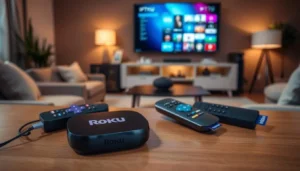
Before attempting any workarounds, it’s crucial to understand why Roku is so restrictive for IPTV users.
Closed Ecosystem: Unlike Android TV or Fire TV, Roku uses a proprietary operating system with no support for third-party app installation or sideloading.
Strict Channel Store Policies: Roku carefully curates its Channel Store, blocking apps that primarily facilitate streaming from third-party sources.
Content Licensing Concerns: Roku avoids legal gray areas by preventing apps commonly associated with unlicensed IPTV services.
Business Model: Roku profits from partnerships with legitimate streaming services and doesn’t want to enable competitors or unlicensed alternatives.
No APK Support: Roku doesn’t run Android, so you cannot install APK files like on Fire TV Stick or Android boxes.
No TiviMate, IPTV Smarters Pro, or Similar Apps: The popular IPTV players used on other platforms simply don’t exist for Roku.
No Sideloading: You cannot manually install apps from outside Roku’s official Channel Store.
Limited Private Channels: Roku’s “private channels” (non-certified channels added via codes) rarely include functional IPTV players.
Workarounds Required: All IPTV viewing on Roku requires indirect methods rather than native apps.
Before exploring workarounds, note that these legal, licensed IPTV services have official Roku channels:
If you’re considering legitimate IPTV services, these work perfectly on Roku with official channels and require no workarounds.
Screen mirroring lets you display your smartphone, tablet, or computer screen on your Roku device, including IPTV apps running on those devices.
Roku supports screen mirroring from:
Note: Roku does NOT support AirPlay from Apple devices (iPhone, iPad, Mac) unless you have a Roku TV or Roku device that specifically advertises AirPlay 2 support (2018+ Roku TVs and some newer models).
Enable Screen Mirroring on Roku:
Step 1: Install IPTV App on Android
Step 2: Connect to Roku via Screen Mirroring
Android Mirroring Tips:
Step 1: Install IPTV Software on Windows
Step 2: Connect Windows to Roku
Windows Mirroring Tips:
For detailed Windows IPTV setup, see our Windows PC IPTV Player Setup Guide.
While functional, screen mirroring has drawbacks:
Battery Drain: Constantly drains mobile device battery during viewing Potential Lag: Slight delay between device and TV display Quality Loss: Compression can reduce video quality compared to native apps Device Tied Up: Your phone/computer is unavailable for other tasks during mirroring Network Dependent: Requires strong Wi-Fi; interruptions cause connection drops No Remote Control: Must control playback from casting device, not Roku remote
Despite these limitations, screen mirroring remains the most reliable way to watch IPTV on Roku.
Roku’s “private channels” (now called “non-certified channels”) can be added using special codes, and some offer IPTV functionality—though options are extremely limited.
What Are Private Channels?
Why IPTV Private Channels Are Rare:
https://my.roku.com on computer or phone.Important Warning: Private IPTV channels on Roku are notoriously unstable, frequently shut down, and often don’t support custom playlists. We cannot recommend specific channels as they change constantly.
Potential Options to Research:
Expected Limitations:
Private IPTV channels on Roku are:
Screen mirroring or external devices provide far better IPTV experiences on Roku.
Roku’s built-in Media Player can theoretically play M3U files from USB drives or network storage, but this method has severe limitations for IPTV.
Step 1: Prepare M3U Playlist
Step 2: Connect USB to Roku
Step 3: Access Roku Media Player
Step 4: Browse to M3U File
Roku Media Player Cannot Stream from URLs: M3U playlist files contain URLs pointing to streaming servers. Roku Media Player is designed for local files, not streaming URLs.
No Network Stream Support: Even if the M3U file opens, Roku Media Player won’t connect to external IPTV servers to stream channels.
USB Port Limitations: Most Roku models lack USB ports, making even this limited approach impossible.
No EPG Support: No program guide information even if streams somehow worked.
Verdict: This method is essentially non-functional for IPTV. We include it only for completeness and to prevent wasted time attempting it.
The most practical approach for serious IPTV viewing on your TV is adding an external streaming device that connects to your television alongside your Roku.
Amazon Fire TV Stick ($25-55)
Advantages:
Models:
Best For: Budget-conscious users wanting full IPTV functionality.
Setup Guide: Fire TV Stick IPTV Setup
Android TV Box ($40-200)
Advantages:
Popular Models:
Best For: Users wanting official Google ecosystem or premium 4K performance.
Setup Guide: Android TV Box IPTV Configuration
Apple TV 4K ($129-149)
Advantages:
Disadvantages:
Best For: Apple ecosystem users willing to pay premium for quality.
Setup Guide: Apple TV IPTV Setup
Investment: $25-55 for Fire TV Stick or budget Android box
Benefits:
Verdict: For anyone using IPTV regularly, a $30-50 streaming device provides dramatically better experience than Roku workarounds and pays for itself in convenience within weeks.
| Method | Ease of Setup | IPTV Experience | Reliability | Cost | Recommendation |
|---|---|---|---|---|---|
| Screen Mirroring | Medium | Fair | Good | Free | ★★★☆☆ Acceptable workaround |
| Private Channels | Hard | Poor | Very Poor | Free | ★☆☆☆☆ Not recommended |
| Roku Media Player | Easy | Non-Functional | N/A | Free | ☆☆☆☆☆ Doesn’t work |
| External Device | Easy | Excellent | Excellent | $25-200 | ★★★★★ Best solution |
For Occasional IPTV Viewing: Screen mirroring from Android or Windows works adequately if you only watch IPTV occasionally and don’t mind the limitations.
For Regular IPTV Viewing: Invest in an external streaming device. The improved experience justifies the $25-55 cost many times over.
For Roku-Only Households: If you’re committed to Roku exclusively, understand that you’ll have a compromised IPTV experience compared to other platforms. Screen mirroring is your best option.
If you’ve chosen screen mirroring as your Roku IPTV method, these optimizations improve the experience.
Use 5GHz Wi-Fi Band:
Position Router Centrally:
Reduce Network Congestion:
Consider Mesh Wi-Fi:
For Android Devices:
For Windows Computers:
Solutions:
Solutions:
Solutions:
Solutions:
Solutions:
Solutions:
Expected Behavior: As explained earlier, Roku Media Player doesn’t support streaming from URLs in M3U files. This is a limitation, not a bug. Use screen mirroring or external device instead.
No, you cannot add standard IPTV apps like IPTV Smarters Pro, TiviMate, or Perfect Player to Roku devices. Roku’s closed ecosystem prevents sideloading applications, and these IPTV apps are not available in Roku’s official Channel Store due to content policy restrictions. Your options are: (1) screen mirroring from devices that do support IPTV apps, (2) searching for rare and unreliable private IPTV channels, or (3) using legitimate, licensed IPTV services like YouTube TV, Sling TV, or Hulu Live that have official Roku channels.
Roku does not support M3U playlist streaming for IPTV. While Roku Media Player can technically recognize M3U files, it cannot stream content from URLs contained within those playlists—it’s designed only for local media playback. There’s no native way to add M3U playlist URLs for IPTV streaming on Roku. You must use screen mirroring from a device that supports M3U playlists (Android phone, Windows PC, etc.) or add an external streaming device like Fire TV Stick that has full IPTV app support.
Roku devices don’t have native VPN app support, making IPTV privacy protection challenging. To use a VPN with Roku: (1) Install VPN on your router (protects all devices including Roku), (2) Share VPN connection from your computer to Roku via Ethernet or Wi-Fi hotspot, or (3) Use a VPN-enabled external device (Fire TV Stick, Android box) connected to your TV. Router-level VPN is most comprehensive but requires a VPN-compatible router. If using screen mirroring for IPTV, you can run VPN on your casting device (Android phone or Windows PC), which protects the mirrored IPTV traffic.
Fire TV Stick is dramatically better for IPTV than Roku. Fire TV Stick allows easy sideloading of any IPTV app (IPTV Smarters Pro, TiviMate, Perfect Player, etc.), supports M3U playlists and Xtream Codes, offers full customization, and provides a professional IPTV experience. Roku has virtually no IPTV app support and requires workarounds like screen mirroring that compromise quality and convenience. If IPTV is a priority, choose Fire TV Stick ($25-55) over Roku, or add a Fire TV Stick to your existing Roku setup. Roku excels at legitimate streaming services but fails for IPTV.
Roku avoids IPTV apps due to: (1) strict content policies preventing apps that facilitate third-party streaming, (2) legal concerns about unlicensed IPTV services, (3) business relationships with legitimate streaming providers they don’t want to undermine, (4) desire to maintain family-friendly, advertiser-friendly reputation, and (5) liability concerns regarding copyright infringement. Roku’s business model focuses on being a neutral platform for licensed content providers, collecting revenue from partnerships and advertising rather than enabling unrestricted app installation like Android devices.
No, you cannot jailbreak Roku devices. Unlike Fire TV Stick (which doesn’t need jailbreaking—just enabling unknown sources), Roku’s operating system is closed and proprietary with no jailbreaking method available. Roku’s architecture prevents system modifications, sideloading, or unauthorized app installation. Claims of “jailbroken Roku devices” are scams. If you need unrestricted IPTV access, switch to Fire TV Stick, Android TV box, or Apple TV—all of which support IPTV apps through legitimate means without requiring jailbreaking.
Screen mirroring itself occurs over your local Wi-Fi network and doesn’t directly use internet data—it’s transmitting from your device to Roku within your home network. However, the IPTV stream you’re watching on your device does use internet data at normal rates (approximately 1-4 GB per hour for HD content). The total internet data usage is the same whether you watch IPTV directly on a device or mirror it to Roku. Screen mirroring simply displays what’s on your device’s screen; the data consumption comes from streaming the IPTV content itself, not the mirroring process.
While Roku devices offer an excellent platform for legitimate streaming services, they present significant challenges for IPTV users due to their closed ecosystem and restrictive policies.
Screen Mirroring (★★★☆☆): The most functional workaround. Works adequately for occasional IPTV viewing but has limitations including battery drain, potential lag, and tied-up casting devices. Best option if you’re committed to Roku-only setup.
Private Channels (★☆☆☆☆): Unreliable, limited, and frequently discontinued. Not recommended except for experimenting. Don’t expect functional IPTV from this method.
Roku Media Player (☆☆☆☆☆): Non-functional for IPTV streaming. Only included in this guide to save you time attempting it.
External Streaming Device (★★★★★): The practical solution. A $25-55 Fire TV Stick or $40-100 Android TV box provides complete IPTV functionality while letting you keep your Roku for its strengths.
If IPTV is important to you, adding an external streaming device is the most sensible approach. It costs less than two months of most IPTV subscriptions yet provides a dramatically superior experience compared to Roku workarounds.
If you occasionally watch IPTV, screen mirroring from Android or Windows suffices despite its limitations.
If you only use legitimate IPTV services like YouTube TV, Sling TV, or Hulu Live, Roku works perfectly with their official channels—no workarounds needed.
Roku’s limitations are unlikely to change. The company has maintained its closed ecosystem approach for years and shows no signs of opening it to IPTV apps. If you want to stay in the Roku ecosystem, accept that IPTV will require workarounds or external devices.
For Canadian viewers specifically, consider that many popular IPTV services offer Canadian content, sports (including hockey), and French-language channels that work perfectly on devices like Fire TV Stick but remain inaccessible directly on Roku.
Explore IPTV setup on more compatible devices:
Are you using Roku with IPTV? Which workaround method works best for you? Did you add an external device, or do you rely on screen mirroring? What challenges have you encountered?
Share your experiences in the comments below to help other Roku users understand their options and make informed decisions about IPTV setup!